
Calculate roof pitch by entering rise and run measurements in your preferred units. Results include pitch ratio, angles in degrees and radians, and slope percentage.
The Roof Pitch Calculator determines roof slope, angle, and ratio (e.g., 4/12) using rise and run measurements. Ideal for contractors and DIYers, it supports metric (meters, centimeters) and imperial (feet, inches, yards) units.
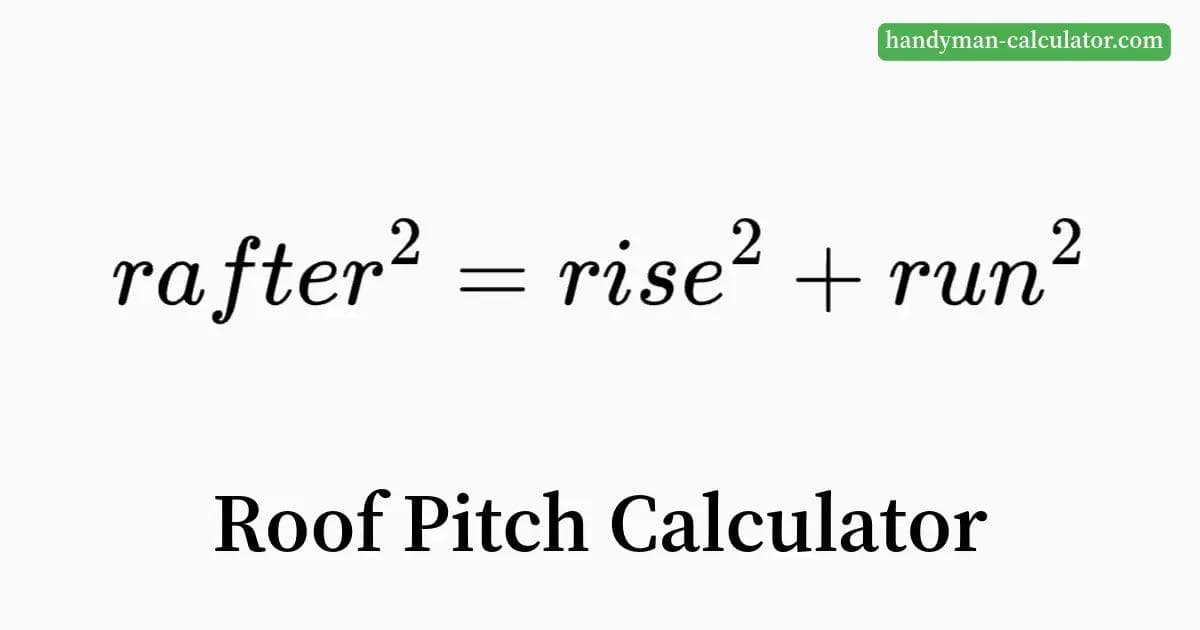
Roof pitch represents the slope or steepness of a roof, typically expressed as a ratio of vertical rise to horizontal run. For example, a 4/12 pitch means the roof rises 4 inches for every 12 inches of horizontal distance. Understanding roof pitch is essential for:
Safety Notice: Before attempting any roof measurements:
For outdoor electrical projects, ensure safe wire sizing with our Voltage Drop Calculator.
Roof pitch can be calculated using simple geometry. Here's how:
Substitute your values:
Find the square root:
So, the rafter length is about 6.18 meters.
Roof pitch is the ratio of the rise to the run. Simply divide:
Substituting:
Multiply by 100 to express it as a percentage:
Your roof pitch is 25%.
Use the arctangent function to convert the pitch to an angle:
Substitute:
The angle of your roof is approximately 14°.
Roof pitch is often expressed in the form of “x:12.” To find this, multiply the pitch by 12:
Substitute:
Your roof pitch is 3:12.
• Rafter Length: 6.18 m
• Pitch (Percentage): 25%
• Angle: 14°
• Pitch (x:12): 3:12
Calculator Limitations: Please note that this calculator provides theoretical calculations. Actual measurements may vary due to:
Next, calculate your roof’s surface area with our Roof Area Calculator to estimate shingles or solar panels.
Our roof pitch calculator simplifies complex calculations. Follow these steps:
Scenario:
Steps:
For a comprehensive guide on converting between roof pitch ratios and angles, including detailed conversion charts and common applications, check out our Roof Pitch Angle Chart Calculator. It provides quick reference tables and detailed explanations for various roof pitch configurations.
Common conversions:
Ensure the pitch is steep enough for effective drainage but not so steep that it increases construction costs unnecessarily.
A 30% slope equals a 7/12 pitch (~16.7° angle). Use our calculator to convert between slope, angle, and ratio.
The most common roof pitch range for residential homes is 4/12 to 9/12, with 6/12 being particularly popular as it provides excellent drainage while maintaining reasonable installation costs.
The safest method is to measure from inside your attic, measuring the rise over a 12-inch run along a rafter. If measuring from the roof is necessary, always use proper safety equipment and consider professional assistance.
The absolute minimum is 2/12 with special installation methods and additional underlayment. However, 4/12 is the recommended minimum for standard installation. Manufacturer warranties may vary based on pitch.
Steeper pitches typically increase costs due to: - Additional safety requirements - More complex installation - Increased material needs - Extended labor time - Special equipment requirements - Enhanced safety measures
Yes, but it requires: - Structural engineering assessment - Building permit approval - Professional contractor expertise - Significant construction work - Consideration of load-bearing walls - Possible foundation evaluation
Remember to always consult local building codes and professional contractors when planning your roofing project. Our roof pitch calculator provides accurate calculations, but final construction decisions should consider all local requirements and professional recommendations.