Calculate mud weight based on hydrostatic pressure and true vertical depth. Results are automatically shown in multiple units.
Drilling mud, also known as drilling fluid, is a critical component in oil and gas operations. One key parameter that defines its effectiveness is mud weight, often expressed in pounds per gallon (ppg). Proper calculation and optimization of mud weight ensure wellbore stability, prevent formation fluid influx, and promote safe and efficient drilling.
Let's explores how to use a Mud Weight Calculator, the key formulas, and the steps to optimize your mud weight.
Mud weight is the density of the drilling fluid, expressed in units such as ppg, specific gravity (SG), or kg/L. It represents the force exerted by the fluid on the wellbore walls.
While manual formulas are essential for understanding, a Mud Weight Calculator offers significant advantages:
A Mud Weight Calculator simplifies operations by:
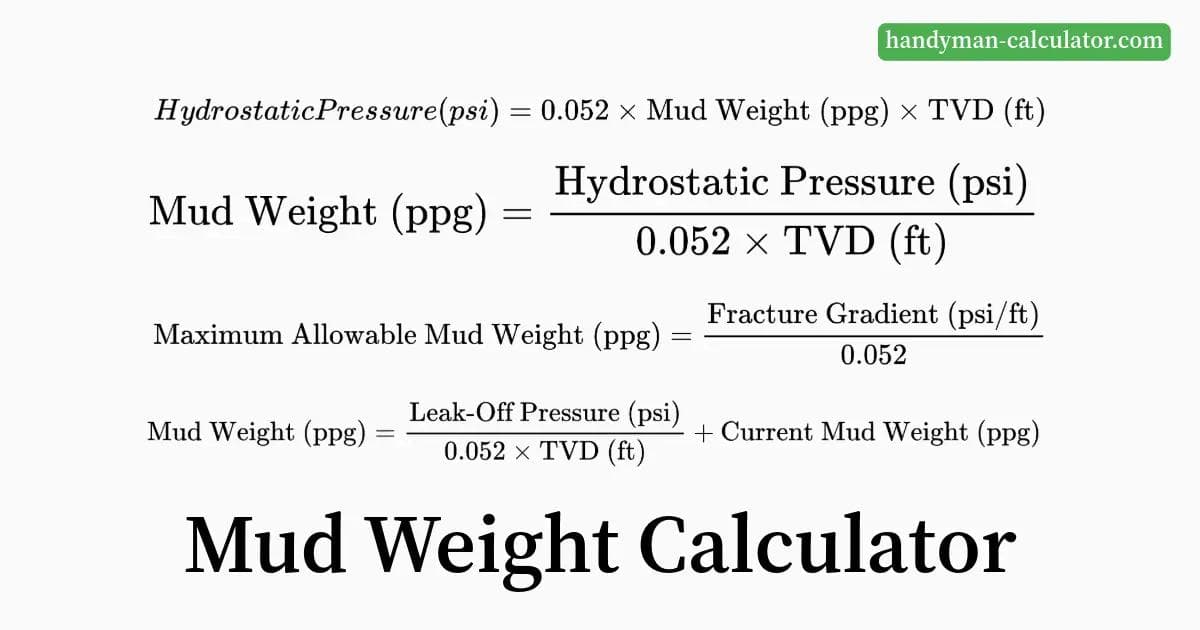
This formula calculates the pressure exerted by the mud column at a given depth.
To determine mud weight required for a specific hydrostatic pressure:
To avoid fracturing the formation:
Example:
Mud weight can be expressed in various units:
Conversion Formula:
Example:
For a mud weight of 10 ppg:
The Mud Weight Calculator is an essential tool for efficient, safe, and optimized drilling. By understanding key concepts like hydrostatic pressure and maximum allowable mud weight, you can ensure stability, prevent formation fluid kicks, and optimize your drilling operations.