
Calculate annular velocity and flow characteristics for drilling operations.
Drilling operations involve numerous calculations to ensure efficiency and safety. One such crucial parameter is Annular Velocity (AV), which determines the speed at which fluid flows through the annular space between the drill pipe and the wellbore wall. Calculating annular velocity is essential for optimizing drilling operations, improving hole cleaning, and preventing costly issues like stuck pipes.
With the Annular Velocity Calculator, you can perform these calculations quickly and accurately. This guide explains the concept of annular velocity, the formulas involved, and how to use our calculator for practical applications.
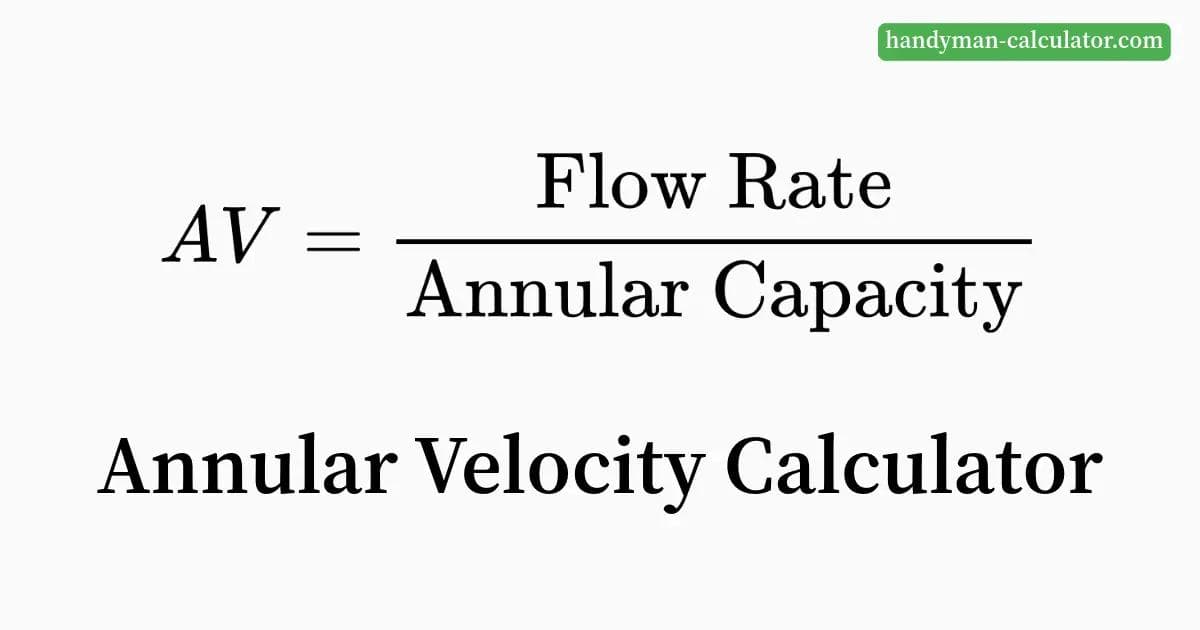
Annular Velocity (AV) refers to the linear speed of fluid moving through the annular space in a well. It’s typically expressed in units like feet per minute (ft/min) or meters per minute (m/min).
Proper control of annular velocity is crucial because:
Three primary factors influence annular velocity:
Here are the main formulas used for calculating annular velocity in different units:
Formula 1:
Formula 2:
Where:
Example:
Flow rate: 800 gpm
Hole size: 10 in.
Drill pipe OD: 5 in.
Formula 1:
Formula 2:
Where:
Example:
Flow rate: 3000 L/min
Hole size: 254 mm
Drill pipe OD: 127 mm
The calculator is widely used in:
Determine the annular velocity if:
Using the formula:
The optimal AV depends on the drilling operation and fluid properties but typically ranges from 100 to 150 ft/min for vertical wells and 200 to 300 ft/min for deviated or horizontal wells.
Yes! Just ensure you input flow rate in cubic meters per second (m³/s) and diameters in meters. The calculator will automatically adjust the formula.
Low AV can lead to poor cutting removal, resulting in stuck pipes or excessive downtime.
The Annular Velocity Calculator simplifies the process of calculating a critical drilling parameter. By optimizing fluid flow through the annulus, this tool ensures smoother, safer, and more efficient operations.