
Convert Feet per Minute (FPM) to RPM instantly with our Feet per Minute to RPM Calculator. Calculate rotational speed for conveyor belts, machining spindles, or industrial rollers using the formula RPM = (FPM × 12)/(π × diameter). Input FPM and diameter in inches, feet, or meters for precise results.
Ideal for engineers and technicians optimizing linear-to-rotational motion in mechanical systems.
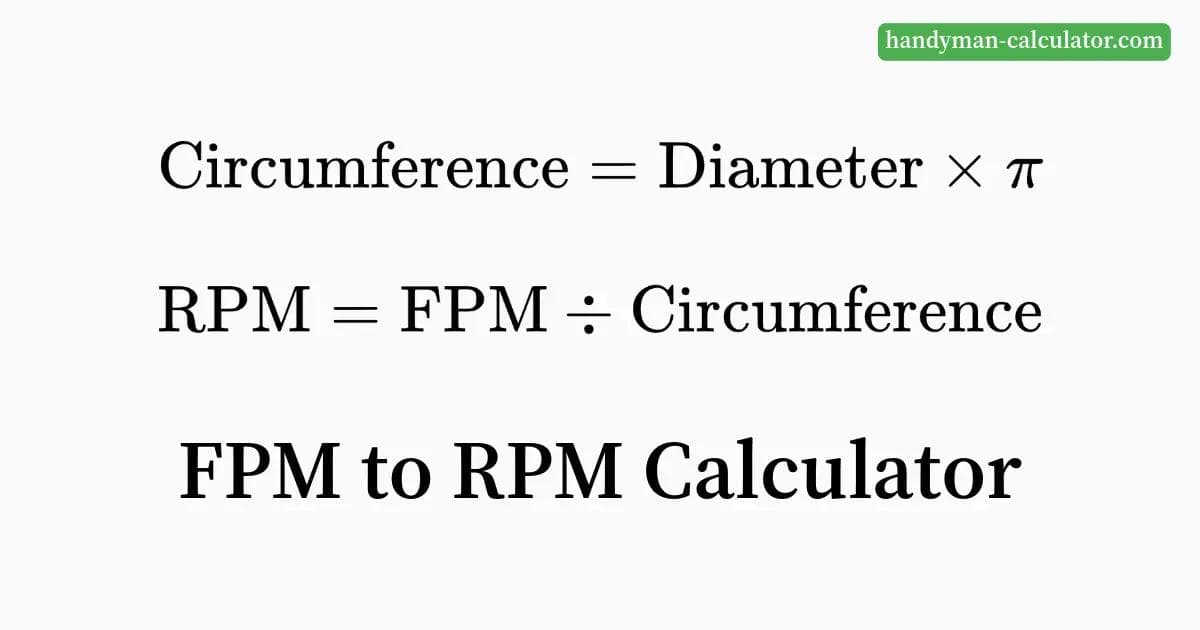
To convert FPM to RPM, you need to know the circumference of the rotating object. Here’s the step-by-step formula:
Follow these steps to calculate RPM from your linear speed:
For reverse calculations, try our RPM to Feet per Minute Calculator.
Let’s calculate RPM for an object traveling at 500 FPM with a diameter of 24 inches:
A: No, you only need the linear speed in feet per minute (FPM) and the diameter of your rotating object in inches to calculate RPM.
A: Simply multiply your diameter in feet by 12 to convert it to inches before using the calculator. For example, 2 feet = 24 inches.
A: Yes, this calculator works for any rotating circular object where you know both the linear speed (FPM) and diameter, from small pulleys to large industrial rollers.
A: No, the calculator can handle any realistic FPM value. However, remember that very high speeds may require special consideration for real-world applications.
This Feet per Minute to RPM Calculator provides a straightforward and efficient way to convert between linear speed (FPM) and rotational speed (RPM). Understanding this conversion is essential in numerous mechanical and industrial applications, from optimizing conveyor belt speeds to determining precise spindle speeds in machining.
Whether you need a quick calculation or a deeper understanding of the relationship between FPM and RPM, this tool and the information provided here are designed to help.
Convert surface speed in feet per minute (FPM) to rotational speed in revolutions per minute (RPM) based on diameter.